Types of Construction Cranes & Their Uses
Construction has come a long way from ropes, pulleys, and brute force. Early building projects relied almost entirely on human strength, with workers using ropes, wooden rollers, and ramps to move massive materials into place. The Greeks introduced some of the earliest lifting devices, but it was the Romans who advanced the concept with treadwheel cranes, where workers walked inside large wooden wheels to power lifts. Even then, lifting was slow, labor-intensive, and often dangerous.
What once took hundreds of workers and months to complete can now be done in a matter of hours with the right equipment. Choosing the right type of crane comes down to what the job actually demands. Not just weight, but access, reach, and how the lift needs to happen. Most construction cranes fall into two main categories: static cranes and mobile cranes. Each serves a different purpose depending on the jobsite, timeline, and lift requirements.
Static Cranes
Static cranes are fixed in one location and are typically used on long-term projects where consistent lifting from a set position is required. These cranes are built for height, stability, and repetition.
Tower Cranes
Tower cranes are one of the most recognizable types of crane, especially in urban environments.
You’ll typically see them on:
- High-rise construction projects
- Large commercial developments
- Dense city job sites with limited ground space
Because they’re anchored to the ground (or structure), tower cranes can reach significant heights and handle heavy materials like steel, concrete, and large structural components. They’re ideal when you need consistent lifting over the same footprint for long periods of time
Hammerhead & Luffing Jib Cranes
Hammerhead and Luffing Jib cranes are variations of tower cranes designed for specific site constraints.
They’re commonly used when:
- Space is limited between buildings
- Multiple cranes are operating on the same site
- Lifting needs to be more controlled in tight areas
Luffing jib cranes are especially useful in crowded urban environments because their adjustable boom allows operators to work without overswinging into neighboring structures.
Mobile Cranes
Mobile cranes are designed for flexibility, speed, and efficiency. Unlike static cranes, they can be transported between job sites and set up quickly, making them the go-to choice for a wide range of construction and industrial work.
At Extreme Crane, we specialize in the agility and strength of the mobile fleet, with cranes built to arrive, set up, and perform with surgical precision.
Truck Mounted Cranes
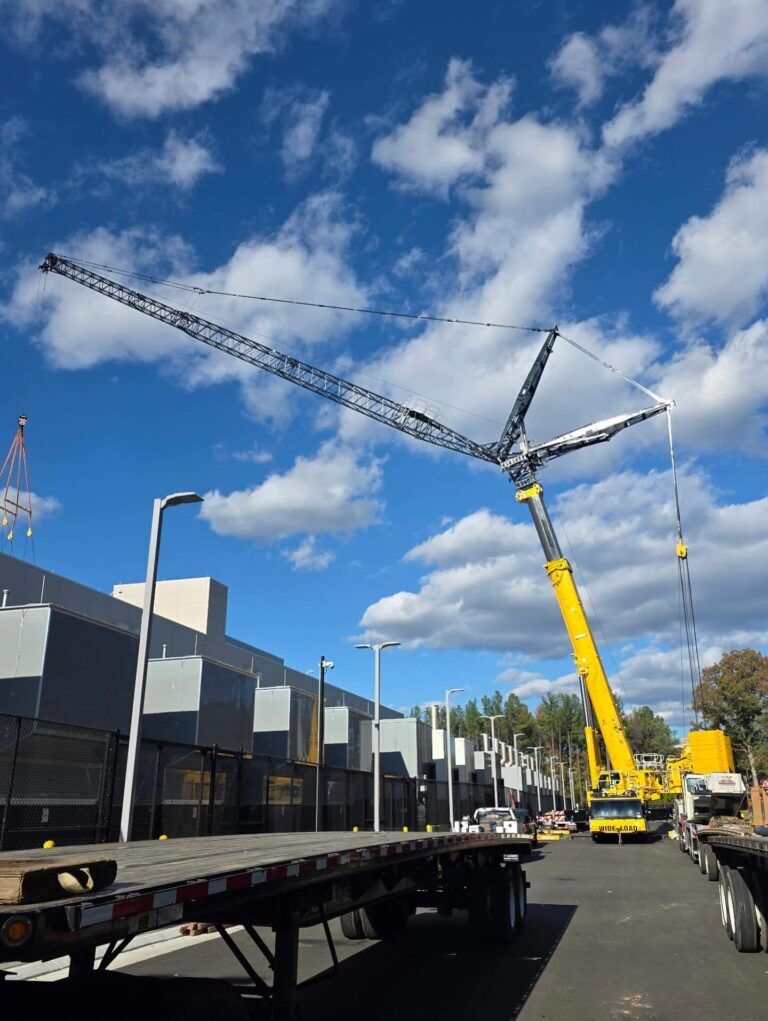
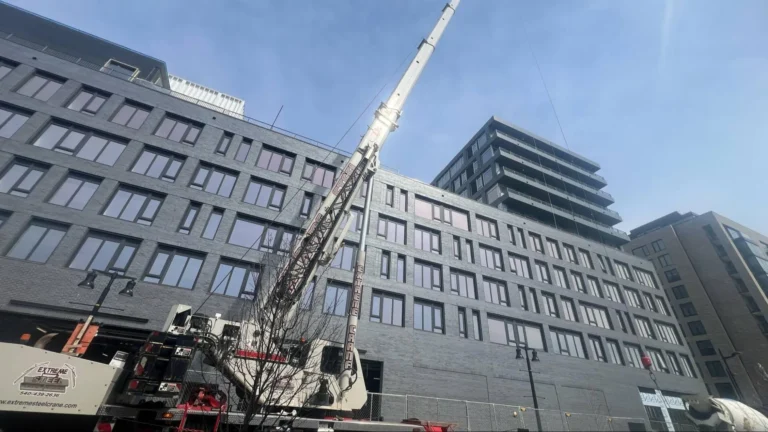
Hydraulic truck cranes are one of the most commonly used types of cranes on modern job sites. They combine mobility with strong lifting capacity, making them a reliable choice for both short-term and long-term projects.
They’re ideal for:
- Structural steel installation
- Mechanical equipment placement
- Precast concrete work
- General construction lifting
At Extreme Crane, our crane lineup includes the Liebherr LTM 1650-8.1 (770-ton), one of the largest hydraulic cranes in America, giving our clients the power, reach, and reliability to tackle even the most demanding jobs.
Compact Carry-Deck Cranes
Compact carry-deck cranes are built for tight spaces where larger equipment simply won’t fit. With a small footprint and a rotating boom mounted on a flat deck, these cranes are designed to move easily around a jobsite while carrying loads short distances.
They’re most commonly used for:
- Indoor construction and industrial facilities
- Equipment installation in tight or congested areas
- Maintenance work inside plants or warehouses
- Jobs with low overhead clearance or limited access
Because they can pick and carry loads without needing to reposition, carry-deck cranes are a great choice for projects that require flexibility and efficiency in confined environments.
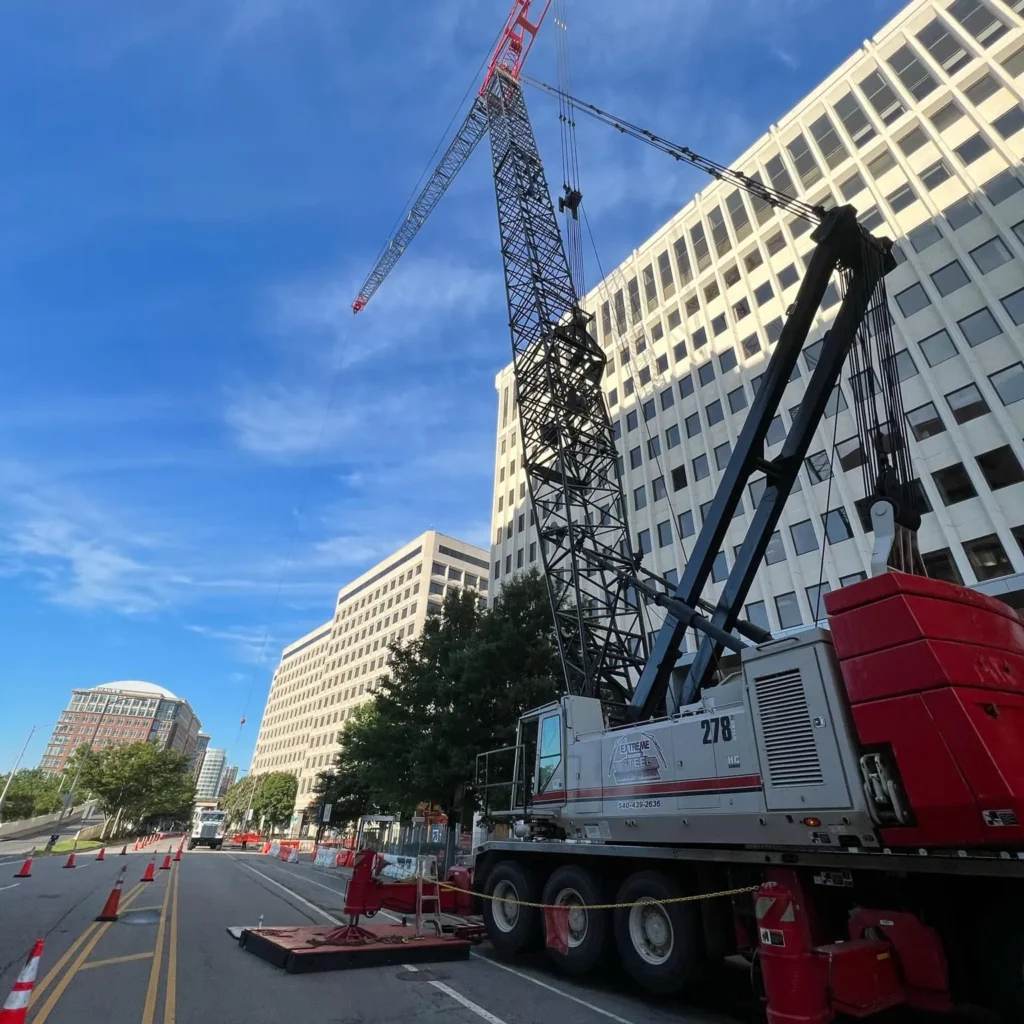
Crawler Cranes
Crawler cranes are built for stability and heavy lifting on challenging terrain.
They’re are best suited for:
- Large-scale infrastructure projects
- Bridge construction
- Job sites with soft or uneven ground
Because they move on tracks instead of wheels, crawler cranes distribute weight more evenly, making them ideal for environments where ground conditions are a concern.
All-Terrain & Rough Terrain Cranes
These cranes are designed to handle difficult jobsite conditions while maintaining strong lifting capabilities.
They’re commonly used when:
- Access roads are unpaved or uneven
- The jobsite requires off-road mobility
- Lifts need to happen in multiple locations on-site
All-terrain cranes offer versatility across both highways and rough job sites, while rough terrain cranes are built specifically for off-road performance.
How Do I Find the Right Crane for My Project?
Choosing the right type of crane comes down to more than just lift capacity.
Some of the most important factors to consider include:
- Access to the site: Can a crane get in and out easily?
- Ground conditions: Will the surface support the load and setup?
- Lift height and radius: How far and how high does the material need to go?
- Weight of the load: This includes not just the object, but rigging and attachments.
- Site constraints: Nearby buildings, power lines, or restricted areas can limit crane positioning and operation.
- Permitting and compliance: Requirements can impact timelines, crane selection, and how the lift is executed.
This is where experience matters! The right crane is only part of the equation. The lift plan, setup, and execution are what determine whether a project runs smoothly or runs into costly delays.
Crane Rental for Construction in Washington, D.C., Virginia and Maryland
Need help finding the right crane for your next project? Contact us to discuss!
At Extreme Crane, we provide more than just crane rental equipment. We deliver complete lift solutions backed by experience, planning, and precision.
Our modern fleet of hydraulic truck cranes is capable of handling projects of any size across Washington, D.C., Maryland, and Virginia. This includes the Liebherr LTM 1650-8.1 (770-ton), one of the largest hydraulic cranes in the United States, capable of handling complex, long-reach lifts over 400 feet.
Every project is supported by:
- Certified NCCCO operators with DC Class 7 licenses
- Engineered lift plans tailored to your site
- FAA, DOT, OSHA, and NAVFAC permitting and compliance
- Ground bearing pressure and soil analysis
- Certified rigging and on-site coordination
When precision matters and there’s no room for error, we bring the equipment, planning, and expertise to get the job done right!